The VIX, Bitcoin ATM Volatility and JGB Yields All Spike Higher
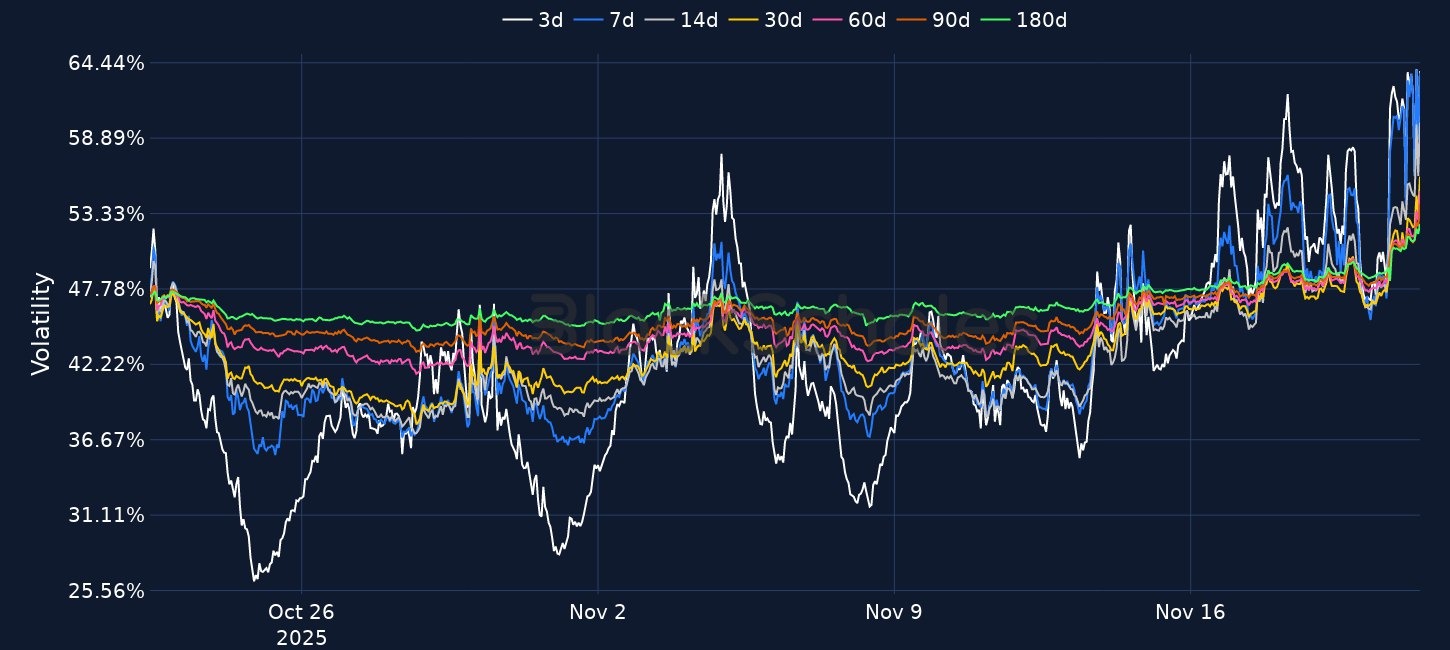
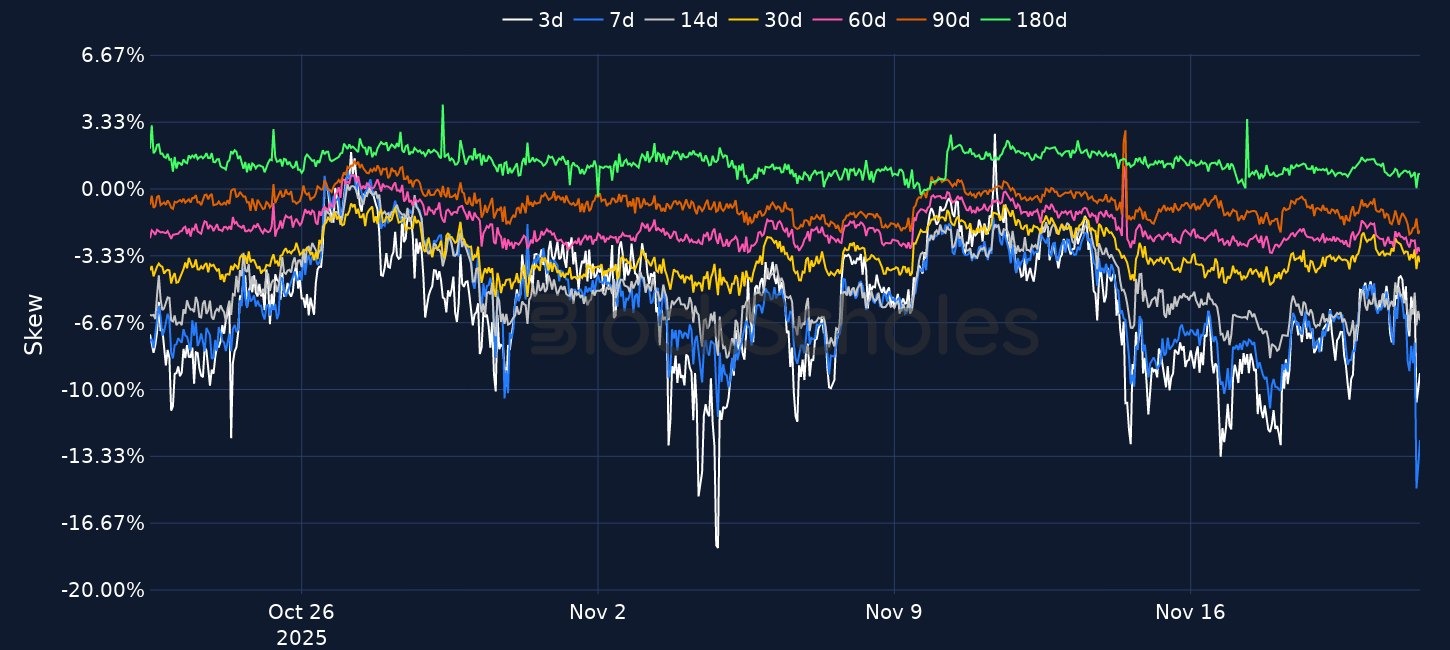
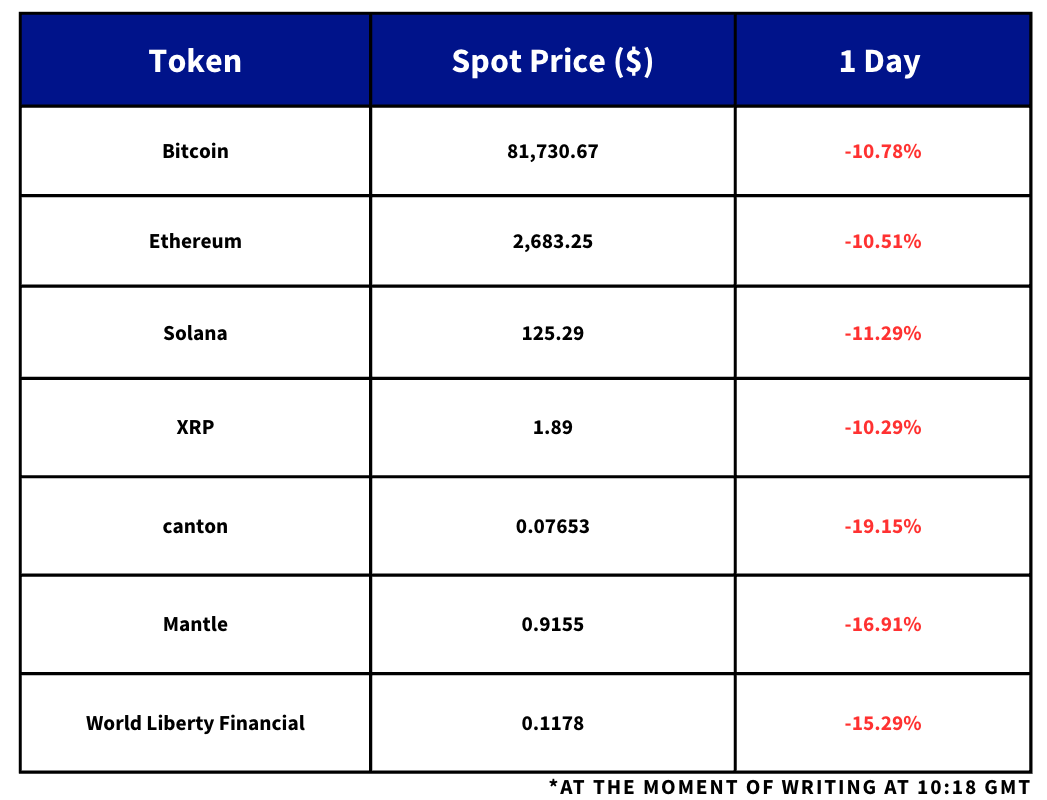
BTC’s selloff deepened with spot hitting $82k (-33% from the October ATH), as spot ETFs have dumped over $5bn of BTC since 10 October, including $903m yesterday (2nd-largest daily outflow on record). 7d realised vol has jumped to ~60%, front-end ATM IV is >60%, and skew is heavily put-rich as the market hedges a potential retest of the $75k April low. Risk-off spilled into US equities, with the S&P 500 down 1.56%, Nasdaq-100 down 2.38%, NVDA down >3%, and the VIX back above 27. A mixed US labour print (119k vs 50k expected, UR up to 4.4%) briefly shifted December Fed pricing, but odds have reverted to ~33% for a cut and ~67% for a pause, while Japan’s ¥17.7tn stimulus has pushed 10y JGBs to 1.84% and weighed on JPY amid intervention warnings and rising idiosyncratic crypto-equity risk around MSTR index inclusion and Metaplanet’s BTC-funded capital raise.

Find out our latest reports, listed below:
Market Snapshot: Overnight Moves

Daily Updates:
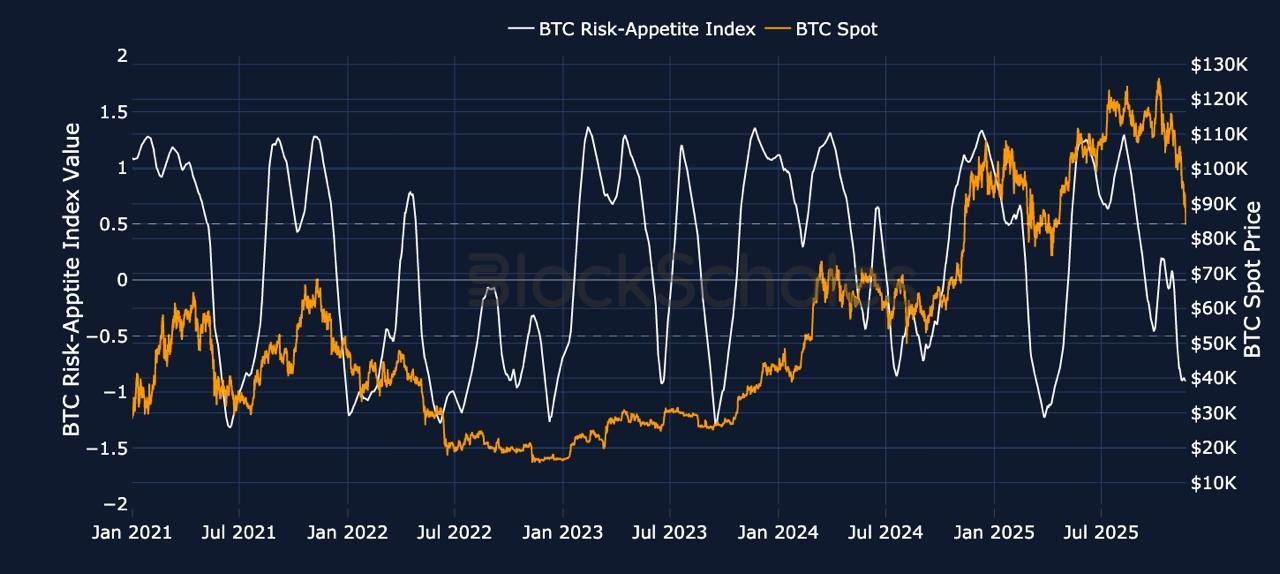
- The selloff in crypto prices continues to extend even further, as BTC fell to $82K earlier today. That’s the lowest price since April 2025 and brings the drawdown from the October all-time high to more than 33%. BTC is now getting closer to the $75K level that marked the local bottom earlier this year.
- The sell side pressure has coincided with waning institutional demand. Since October 10, 2025, Spot ETFs have sold more than $5B worth of bitcoins. Yesterday alone, $903.2M walked out of the Spot products — that’s the second largest ever single-day outflow, second only to a $1.1B outflow in late February 2025.
- Such dramatic repricing to the downside has unsurprisingly pushed up BTC’s 7-day realized volatility by 20 percentage points to 60% from earlier last week. That’s also resulted in an explosive move higher in ATM implied volatility across options at all tenors.
- Outperformance at the front end of the term structure is particularly notable however — 7-day ATM IV currently trades above 60%, exceeding even the levels reached in the immediate aftermath of the October 10, 2025 liquidation unwind. Alongside that repricing in short-tenor volatility, BTC’s vol smiles have skewed even further towards out-the-money put contracts, showing a market that is clearly hedging against the possibility of a retest of the April lows.
- The volatile moves in crypto was not an isolated event however. On Wall Street, US equities also underwent their own bout of de-risking. The S&P 500, Nasdaq-100 and NVDA all surged at the open in New York trading – a move reflective of Nvidia’s higher than expected earnings report released after hours on Wednesday. That move proved not to last long. By the end of the session, the S&P 500 closed 1.56% lower, the Nasdaq-100 dropped 2.38%, and AI bellwether NVDA plunged more than 3%.
- The VIX index jumped past 27, a level it last traded at during the April tariff turmoil.
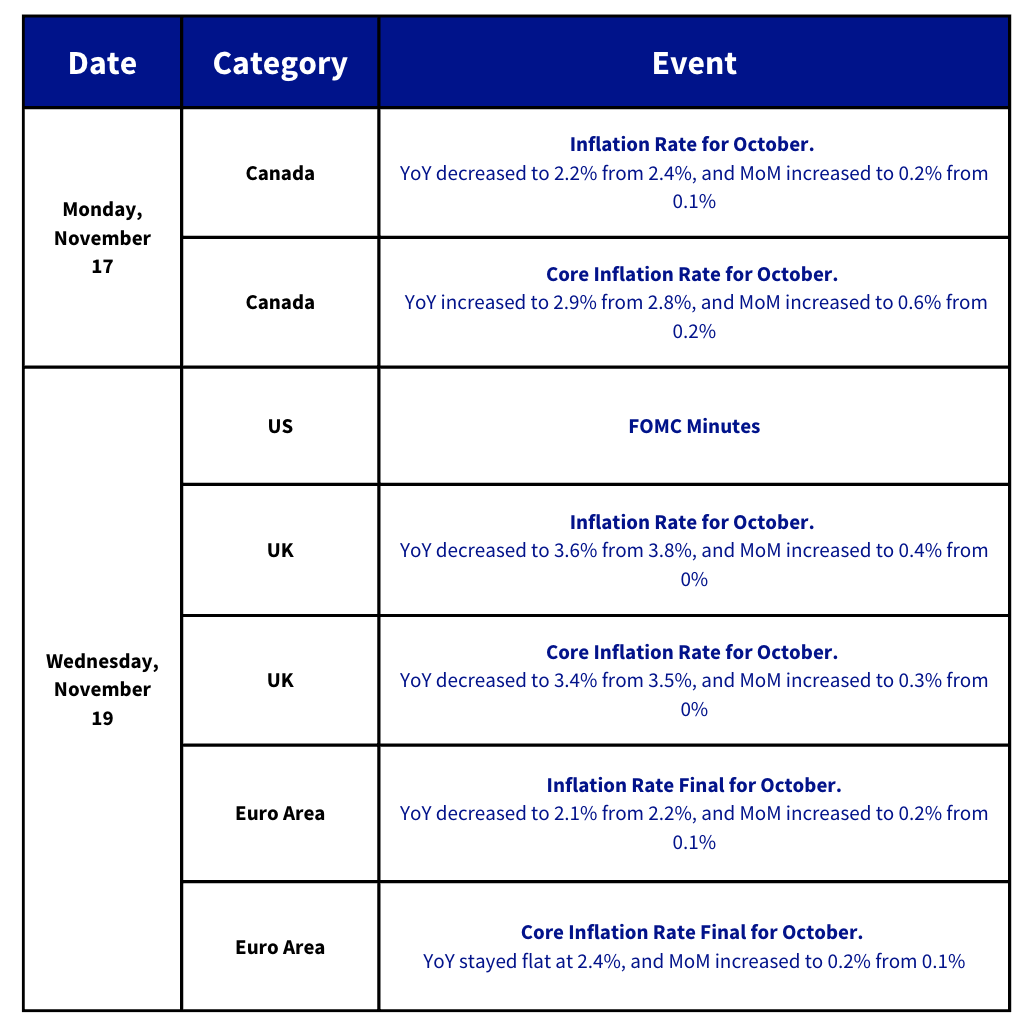
- Part of the de-risking can be attributed to a mixed September jobs report.
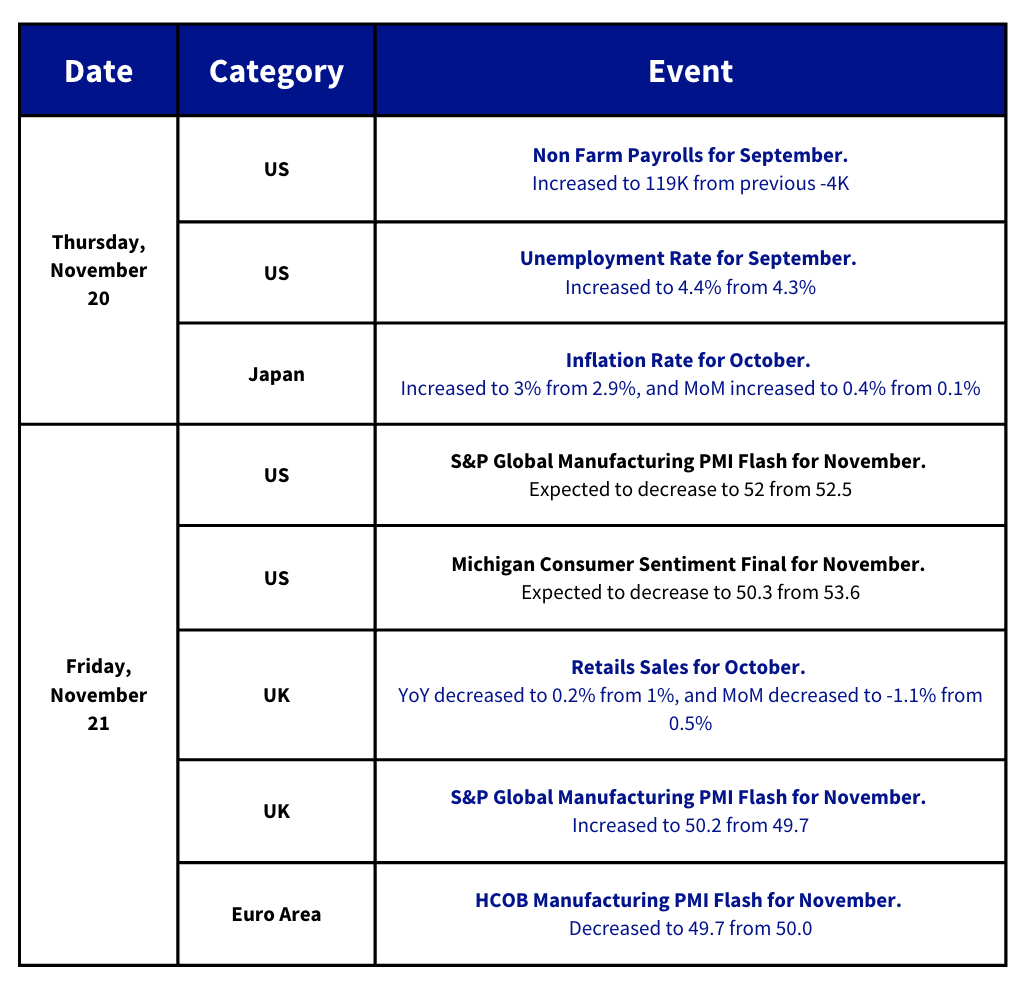
- The US economy added 119,000 jobs in September, more than double the expected 50,000, while the unemployment rate ticked up a tenth of a percentage point to 4.4%, the highest since October 2021. In the aftermath of the release, markets began to modestly reprice the probability of a December rate cut, however that also proved to be a temporary reprice.
- Odds have returned back to pre-NFP levels: that is 33% for a 25bps cut and 67% for a pause. Markets also acknowledged that the September jobs report provided an outdated snapshot of the labour market, particularly problematic given that the BLS announced that it won’t be releasing an October jobs report.
- Chair Powell said in his October press conference: “What do you do if you’re driving in the fog? You slow down” – a stronger than expected September jobs report and a lack of October data before the final FOMC meeting of the year all provide evidence for the “slow down” that Powell advocated may be necessary.
- Another major source of volatility in markets currently is the rise in Japanese sovereign bond yields. Yesterday, Prime Minister Sanae Takaichi’s cabinet approved the largest fiscal spending package in the nation since the Covid pandemic.
- That came after comments earlier in the week when Takaichi said her top priority "is to address the rising prices that the people are facing". Headline inflation in Japan is currently at 3%, and has been above the BOJ’s 2% target for 43 straight months – the longest stretch since 1992. In order to tackle those concerns, Takaichi said her government "will implement strategic spending based on the philosophy of responsible and proactive fiscal policy."
- As such, her cabinet approved a stimulus plan of ¥17.7T ($112B).
- ¥11.7T of that stimulus plan will be towards giving Japanese consumers price relief – including ¥7,000 in subsidies for gas and electricity bills for each household over three months through March at a cost to the government of ¥500B. Takaichi’s government also raised the income tax-free threshold, costing ¥1.2T.
- However, such expansive fiscal spending has sent Japanese government bonds and the Japanese yen tumbling lower.
- JGB yields have now risen to multi-decade highs: yields on 10-year JGBs rose to 1.84% yesterday, the highest in 17 years. Ultralong bonds have also seen their yields soar with the 40-year yield reaching a record level.
- Among developed nations, Japan has the highest debt-to-GDP ratio — which according to the IMF sat at 236.66% in 2024.
- Earlier today, the country’s Finance Minister Satsuki Katayama warned that the government would intervene in foreign exchange markets should the yen continue to weaken.
- Katayama said “The government will take appropriate action against disorderly FX moves, including those driven by speculation as needed, in line with the approach set out in the Japan-US joint statement issued in September”.
- Bloomberg reported that JPMorgan analysts see a material risk that MicroStrategy (MSTR), Michael Saylor’s bitcoin-heavy vehicle, could be excluded from major benchmarks such as the MSCI World and Nasdaq indices under revised MSCI guidelines allowing the removal of companies whose balance sheets are more than 50% exposed to digital assets, potentially triggering up to $2.8B in index-related outflows.
- While no official decision has been made yet, with an outcome expected by 15 January 2026, the risk is notable given that MSTR has only been in the MSCI World index since 31 May 2024 and its growth model has relied on issuing equity to buy bitcoin and capturing a valuation premium over the underlying holdings.
- That premium has now largely eroded, with the company’s market value converging towards the value of its crypto assets, signalling waning investor confidence in the listed wrapper.
- Bitcoin treasury company Metaplanet is preparing to raise around ¥21B ($135M) by issuing 23.6M MERCURY shares, its newly created Class B preferred stock. The company intends to use close to ¥15B ($95M) of this capital to expand its Bitcoin holdings. The rest will be allocated to Bitcoin yield-generating initiatives and to redeeming existing corporate bonds.
- The SEC’s Crypto Task Force has announced their next public roundtable on December 15, 2025, to discuss policy on Financial Surveillance and Privacy.
This Week’s Calendar:


Charts of the Day: