Last Updated:
December 22, 2025
•
6 min read
PARITY Act Emerges
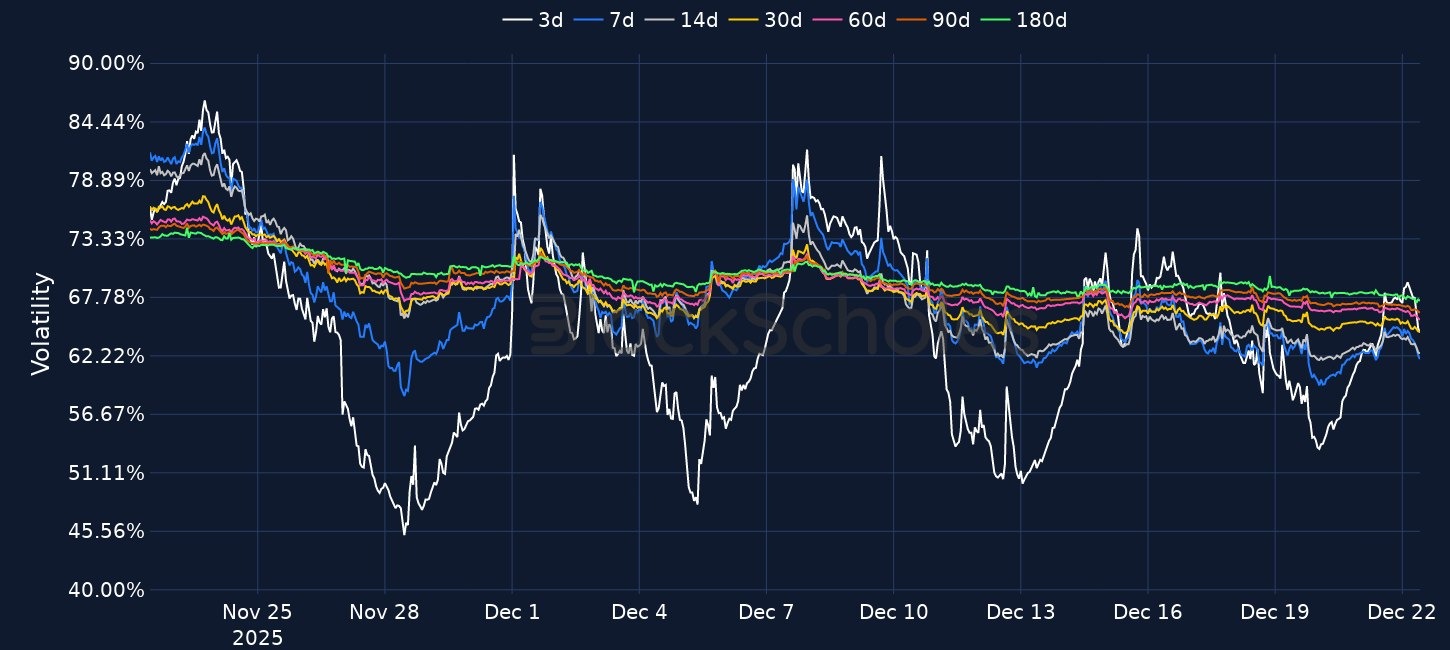
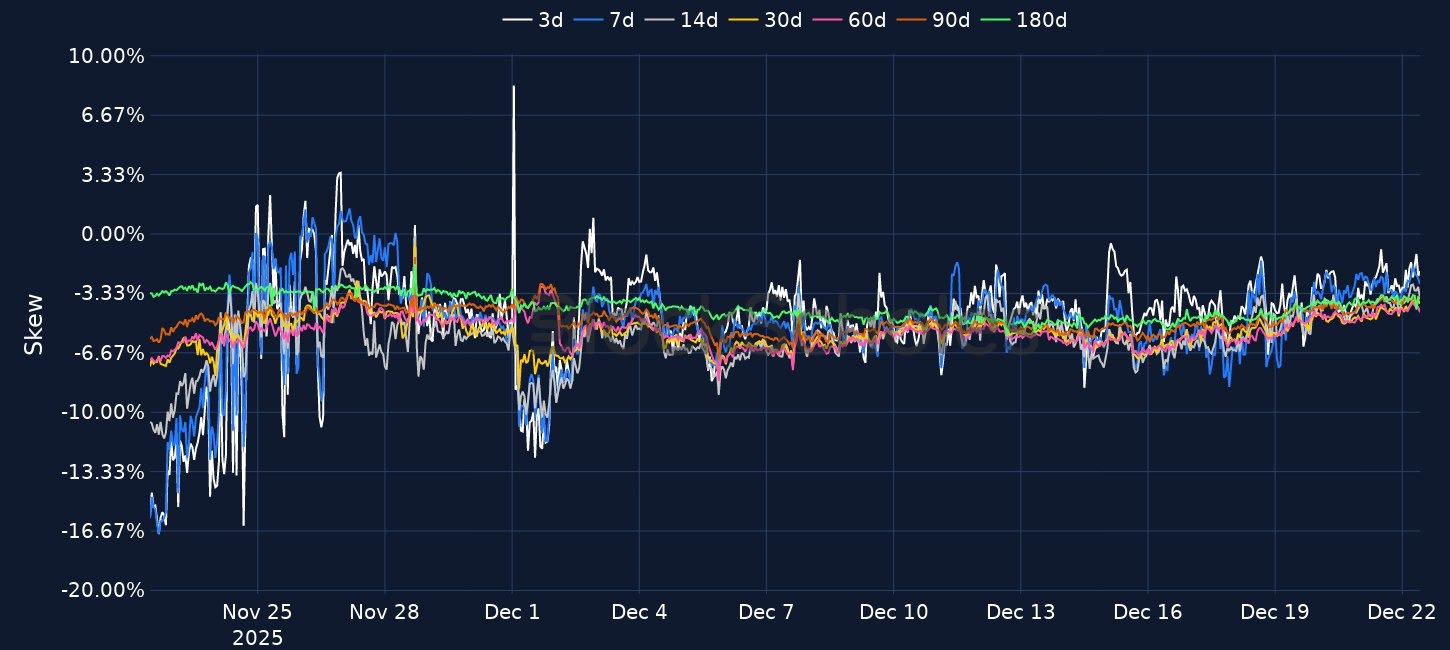
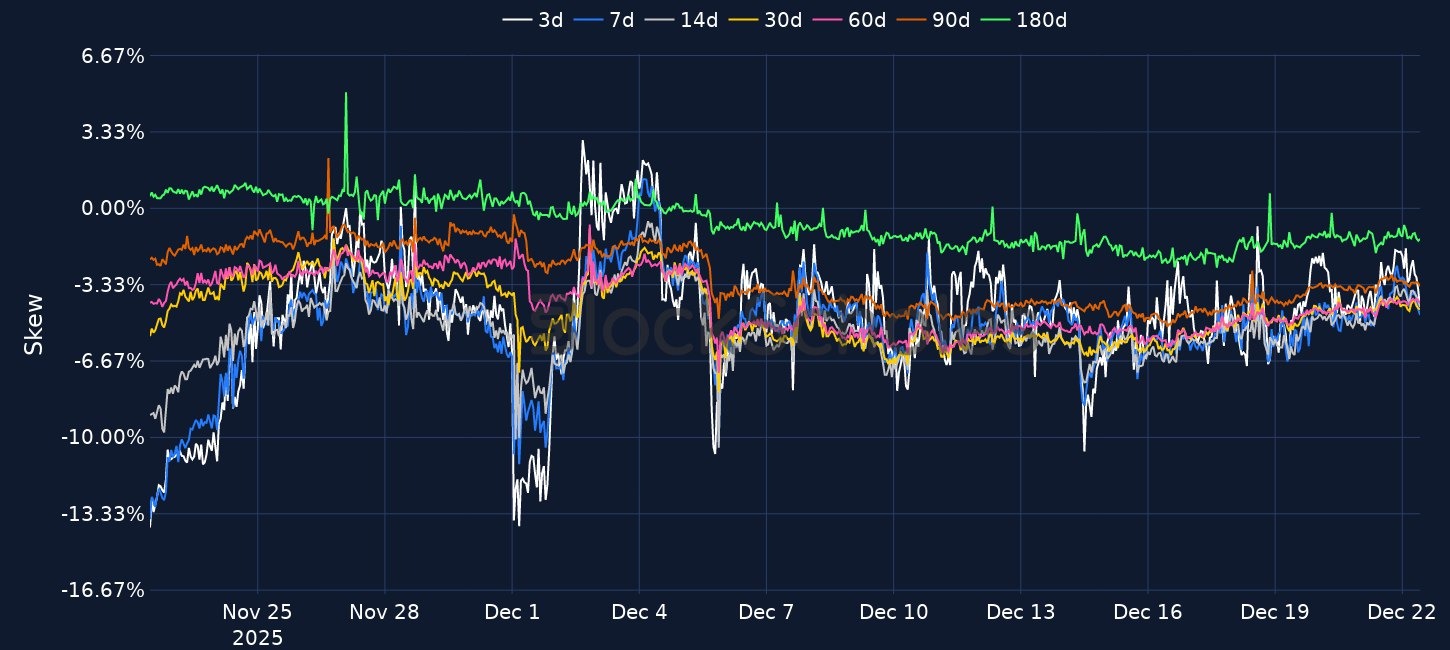
BTC rallied about 4.8% from roughly 84K to 88K on Friday and held those gains over the weekend, briefly extending in early Asia before stalling at the 90K resistance level. ETH followed, rebounding back above 3,000 from below 2,800, with futures premia firming and ETH funding rates rising to their highest since late November. Macro risk tone improved as the S&P 500 rose 0.88% and the Nasdaq-100 gained 1.3% on Friday, while 2Y and 10Y Treasury yields still fell around 3 to 4bp on the week, leaving markets priced for a January 2026 Fed pause and roughly even odds of a March cut. Despite the spot rebound and early signs of a sentiment bottom, BTC and ETH options remain defensively positioned with persistent put-skew across tenors.

Find out our latest reports, listed below:
Market Snapshot: Overnight Moves

Daily Updates:
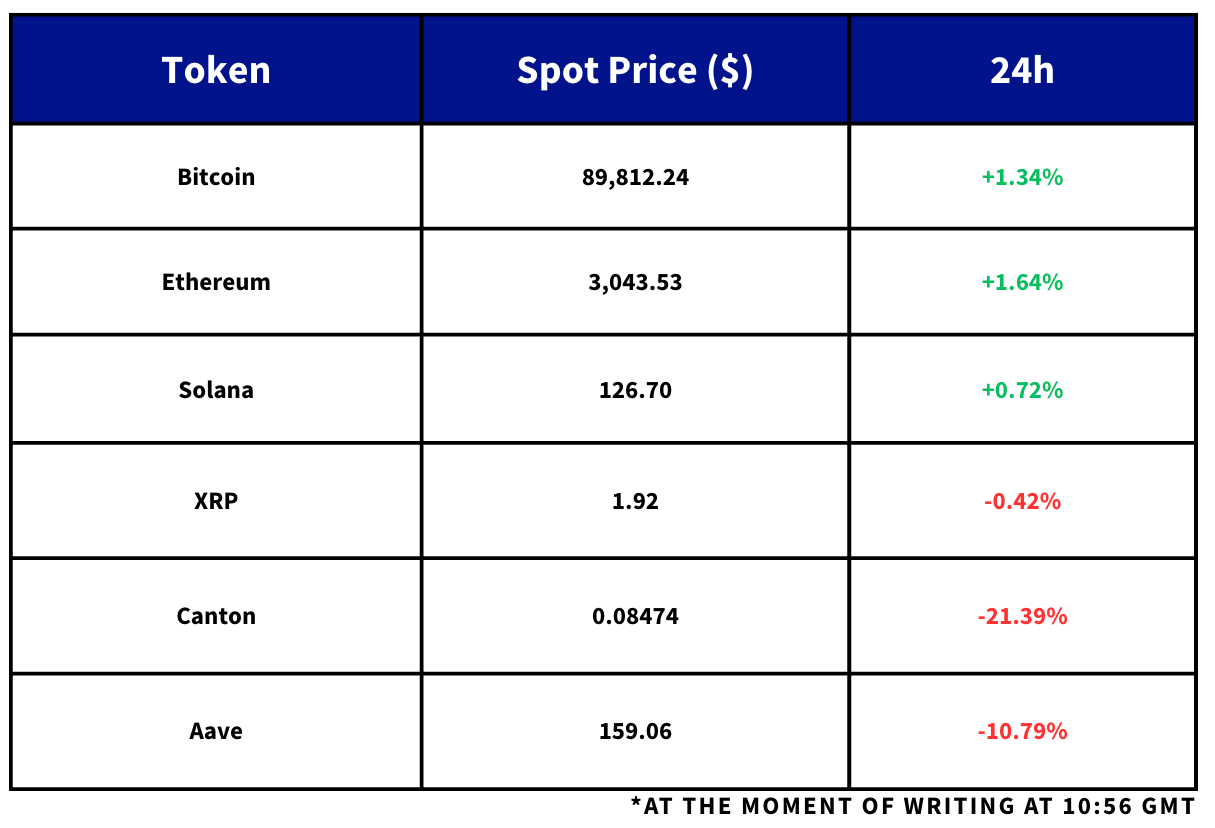
- Last Friday’s rally pushed BTC up from $84K to $88K, a level it then held the line at over the course of the weekend. In early Asian trading hours today, BTC modestly extended Friday’s moves but is currently capped at the $90K resistance level.
- ETH’s spot price followed a similar pattern also — with the second largest crypto once again reclaiming $3,000, after trading below $2,800 on Friday.
- Risk sentiment in crypto was supported by a climb in US equities during Friday’s trading session last week — the S&P 500 wiped out most of its losses for the week and ended Friday up 0.88%, while the Nasdaq-100 climbed 1.3%.
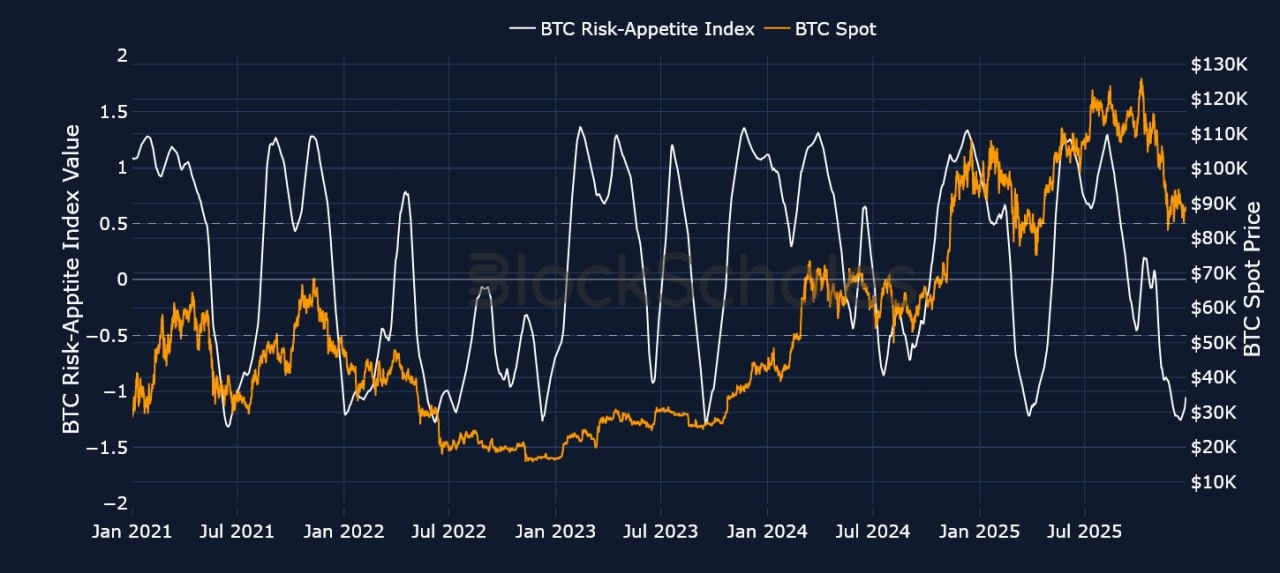
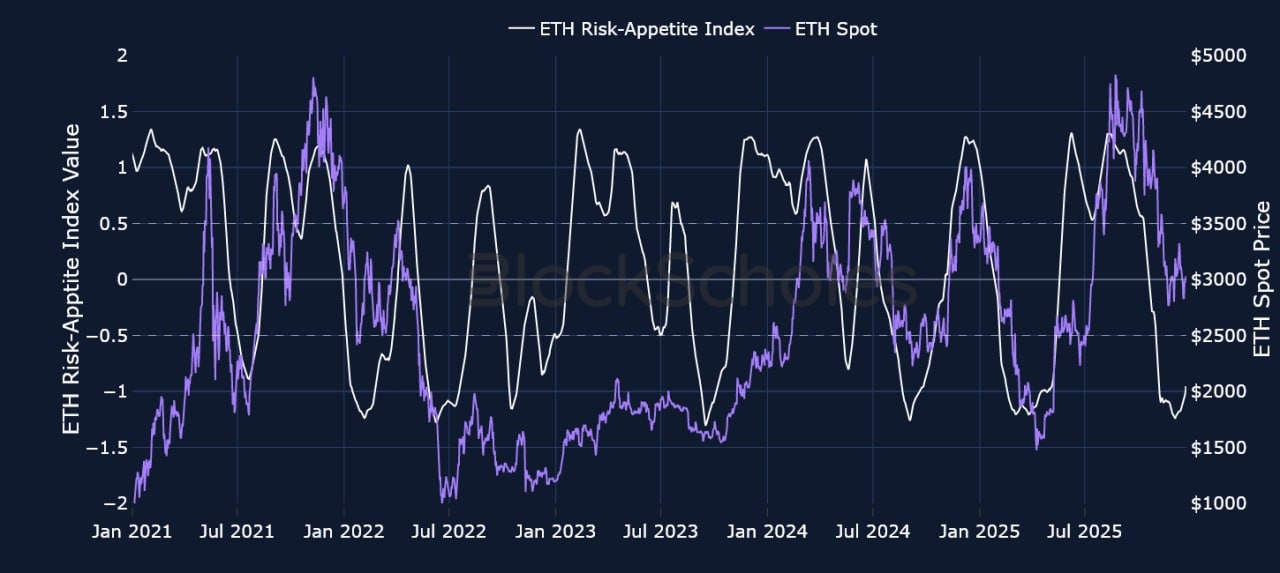
- Overall, the recent recovery in spot prices has bolstered tentative signs of a bounce in sentiment across a number of different indicators. Our Risk-Appetite Index (see in Charts of the Day) for both BTC and ETH are showing early signs of a potential bottom being reached. Additionally, ETH funding rates shot up today to their highest level since late November, while futures prices trade at a premium to spot for BTC and ETH.
- In options markets however, vol smiles are still skewed bearishly towards OTM put contracts at all tenors for BTC and ETH, suggesting the recovering sentiment has not yet been enough to switch options traders into bullish positioning.
- Despite yields rising slightly on Friday, US Treasuries saw their first weekly gain since the end of November, with both the 10Y and 2Y yield declining three-to-four basis points over the week. Those downward moves reflected last week’s unexpectedly cool CPI figures (core CPI rose 2.6%, though the figures have come with skepticism) and the rise in November’s unemployment rate (4.6%) to the highest level since September 2021.
- According to Fed funds futures contracts, markets currently expect a pause in the January 2026 FOMC meeting and roughly even odds of a reduction in March.
- Over the course of 2026, current futures positioning suggests expectations for two more cuts. That is not only at odds with the Fed’s December SEP, where the median FOMC participant projects only one quarter-point reduction in 2026, as well as recent Fed comments.
- Last Friday, New York President John Williams, who crucially influenced the odds of a rate cut in this month’s meeting, said that he now no longer sees urgency to further adjust interest rates.
- Speaking on CNBC, Williams said “I don’t personally have a sense of urgency to need to act further on monetary policy right now, because I think the cuts we’ve made have positioned us really well”.
- According to Williams, last week’s employment and inflation reports were distorted by data collection issues during the recent government shutdown. Nonetheless, the figures still suggest underlying inflation is making progress towards the Fed’s 2% goal and the labour market is gradually softening.
- Williams said there are “no signs of a sharp deterioration at all” in the labor market and “I think that some of the data that we’re seeing is actually pretty encouraging, in the sense of CPI news, and I think it represents the continuation of this disinflationary process we’ve seen”.
- Notably, more hawkish Fed President Beth Hammack also noted that monetary policy is now in a good place to pause before making any further rate reductions.
- In a Wall Street Journal interview aired yesterday, Hammock said “Where we are today is my base case that we can stay here for some period of time until we get clearer evidence that either inflation is coming back down to target or the employment side is weakening more materially”.
- Hammack said that “We took 75 basis points off of the policy rate, which should help support that labour side of our mandate, but we do need to be mindful … I’m very focused on making sure that we can get inflation back to target.”
- She will also be a voting member on the committee next year.
- Republic Representative Max Miller of Ohio and Democrat Representative Steven Horsford of Nevada have released a bipartisan draft for crypto tax legislation in the US House of Representatives called the Digital Asset Protection, Accountability, Regulation, Innovation, Taxation, and Yields (PARITY) Act.
- The draft text aims to clarify the tax treatment of digital assets and make them more aligned with the taxation of traditional securities. The draft outlines a new “de minimis” rule that would exempt taxpayers who engage in transactions involving regulated, dollar-pegged stablecoins worth less than $200 from capital gains taxes.
- “Today, even the smallest crypto transaction can trigger tax calculation … Our discussion draft of the Digital Asset PARITY Act takes a targeted approach that provides an even playing field for consumers and businesses alike to benefit from this new form of payment” Republican Horsford said.
- The bill outlines specific requirements for eligible stablecoins including:
- must be issued by a permitted payment stablecoin issuer
- must be pegged to the US dollar only
- “The payment stablecoin has been actively traded and maintained a price
- Within 1 percent of $1.00 for at least 95 percent of the trading days in the preceding 12 months; and
- Was in fact, acquired by the taxpayer for a price within 1 percent of $1.00”.
- Another focus of the bill is on providing clarity as to when mining and staking rewards from crypto should be taxed.
- During the Biden-era, IRS guidance stated that rewards are taxed as income when received. The Miller-Horsford however aims to allow taxpayers to defer tax on rewards for five years.
- Miller said in a statement that “America’s tax code has failed to keep pace with modern financial technology. This bipartisan legislation brings clarity, parity, fairness, and common sense to the taxation of digital assets.”
- Hong Kong’s Insurance Authority is weighing stricter capital treatment for insurers’ crypto exposure, based on a draft proposal seen by Bloomberg.
- The framework would apply a 100% risk charge to crypto assets, while Hong Kong-regulated stablecoins could attract risk charges aligned with their underlying fiat currency.
- Public consultation is expected to run from February to April 2026 ahead of legislative consideration, reinforcing Hong Kong’s push to build a tightly regulated digital-asset market.
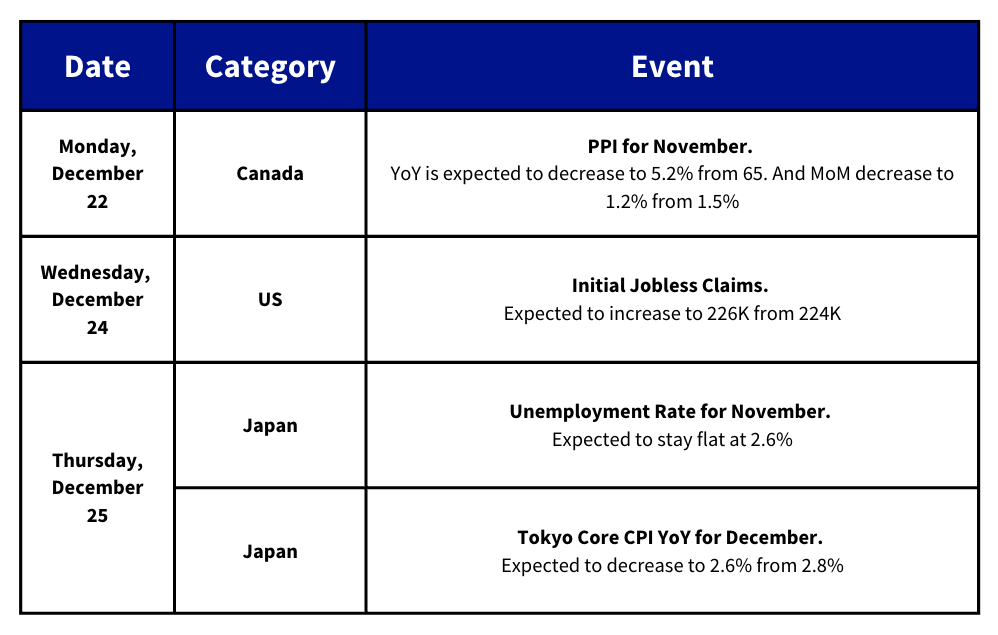
This Week’s Calendar:

Charts of the Day: