Bitcoin Reached its Lowest Level Since Trump’s Re-election
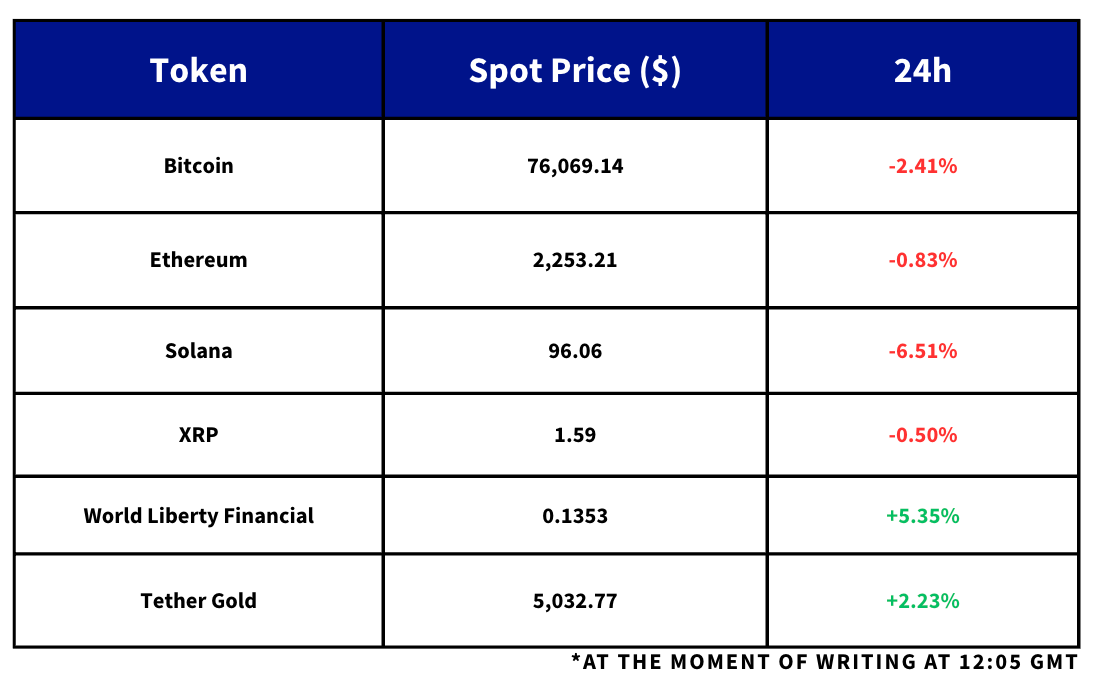
Crypto markets extended their rout, with BTC briefly sliding to a 15-month low near $72,000 and dragging total crypto market cap down by roughly $500B since end-January, as ETF flows flipped back to $272M of outflows and derivatives stayed defensively positioned with strong demand for downside protection and muted futures positioning. Broader risk sentiment was also weak: US equities sold off, with the S&P 500 down 0.84% and the Nasdaq-100 down 1.55% amid fresh AI-automation concerns for software names, while gold and silver rebounded sharply, taking gold back above $5,000/oz. In Washington, President Trump signed a $1.2T spending bill to end the partial shutdown, but focus shifts to Homeland Security funding that expires on Feb 13, as Fed speakers signalled a still-divergent read on the “last mile” of inflation.

Find out our latest reports, listed below:
Market Snapshot: Overnight Moves

Daily Updates:
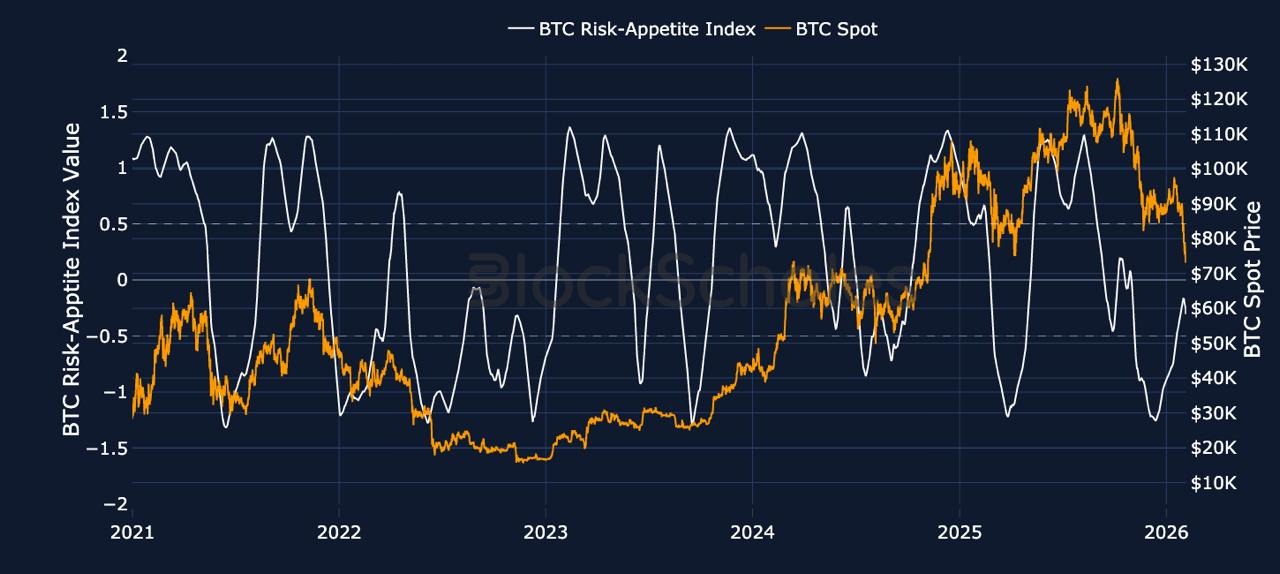
- The rout in crypto assets continued over the last 24 hours with BTC intraday falling to a 15-month low of $72,000 — a level it last traded at since President Trump’s re-election back in November 2024.
- That drop to $72K not only meant BTC fell lower than the post-Liberation Day low, it also dragged the rest of the crypto market down, which has seen its total market-cap drop by nearly $500B since the end of January.
- Spot Bitcoin ETFs were unable to continue their net acquisition for a second day in a row, resulting in $272M in outflows yesterday, following a sizable inflow last Friday of $561.8M.
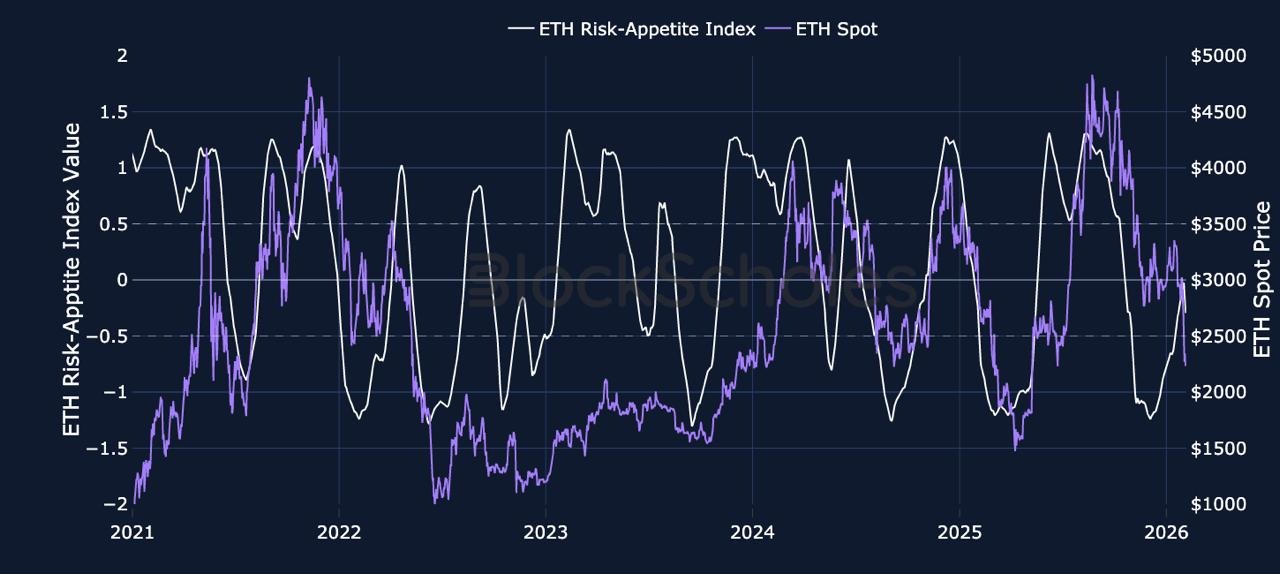
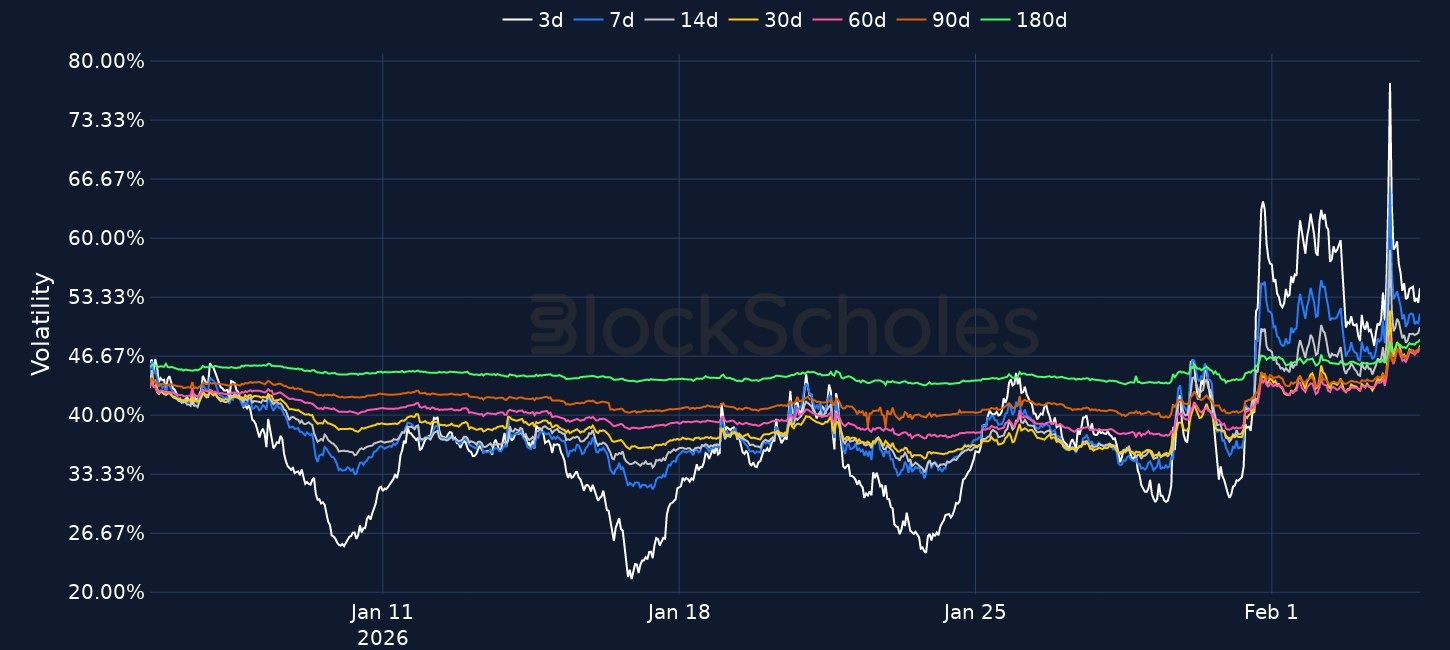
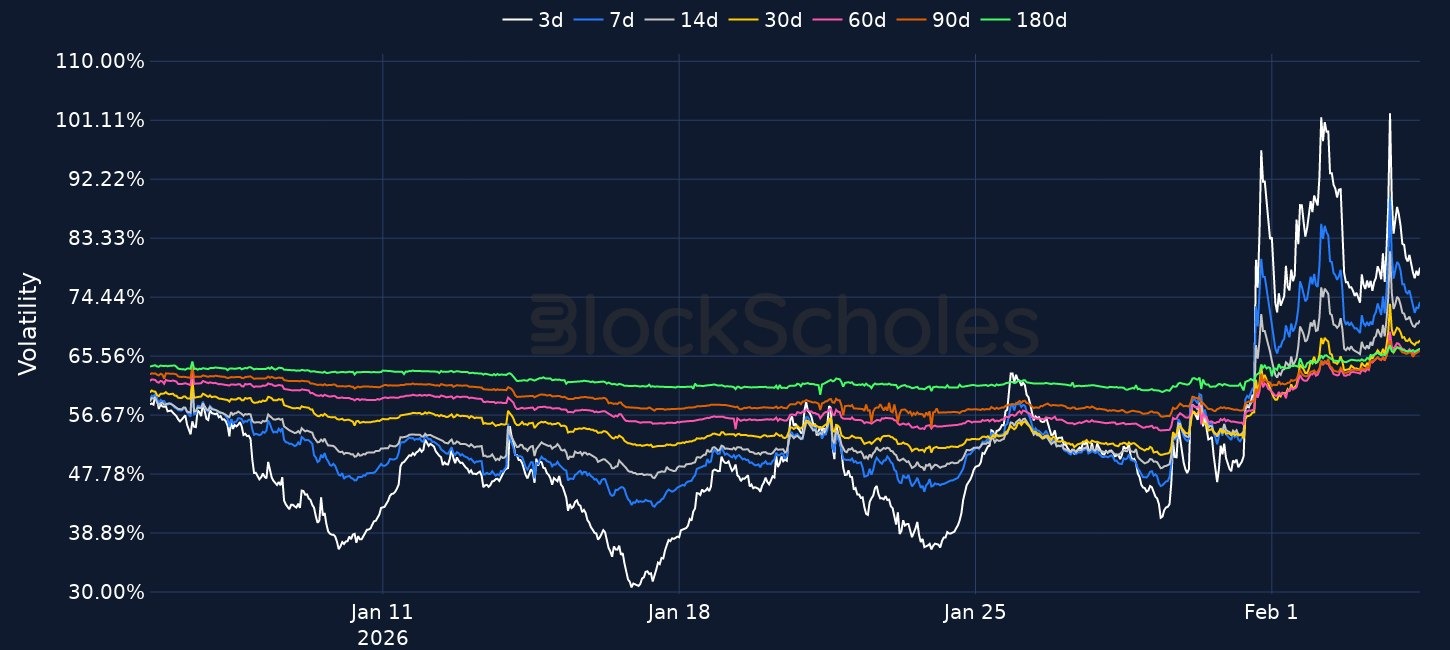
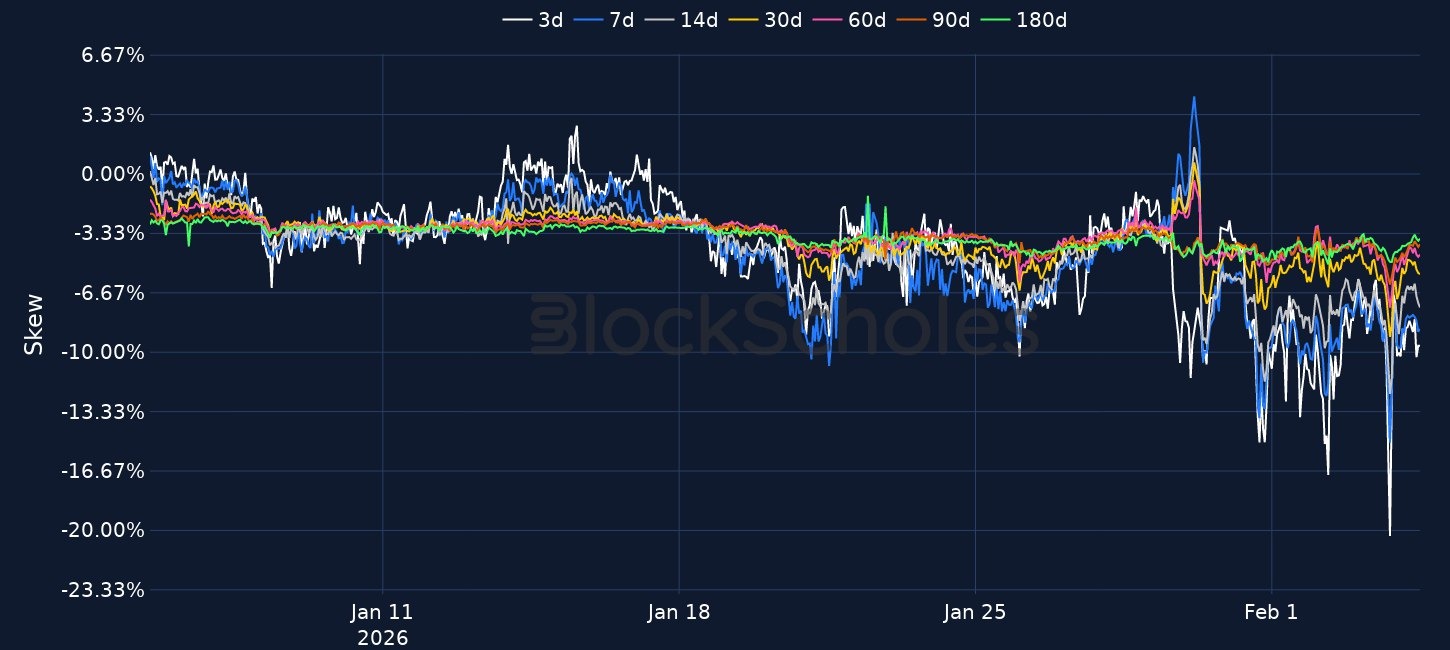
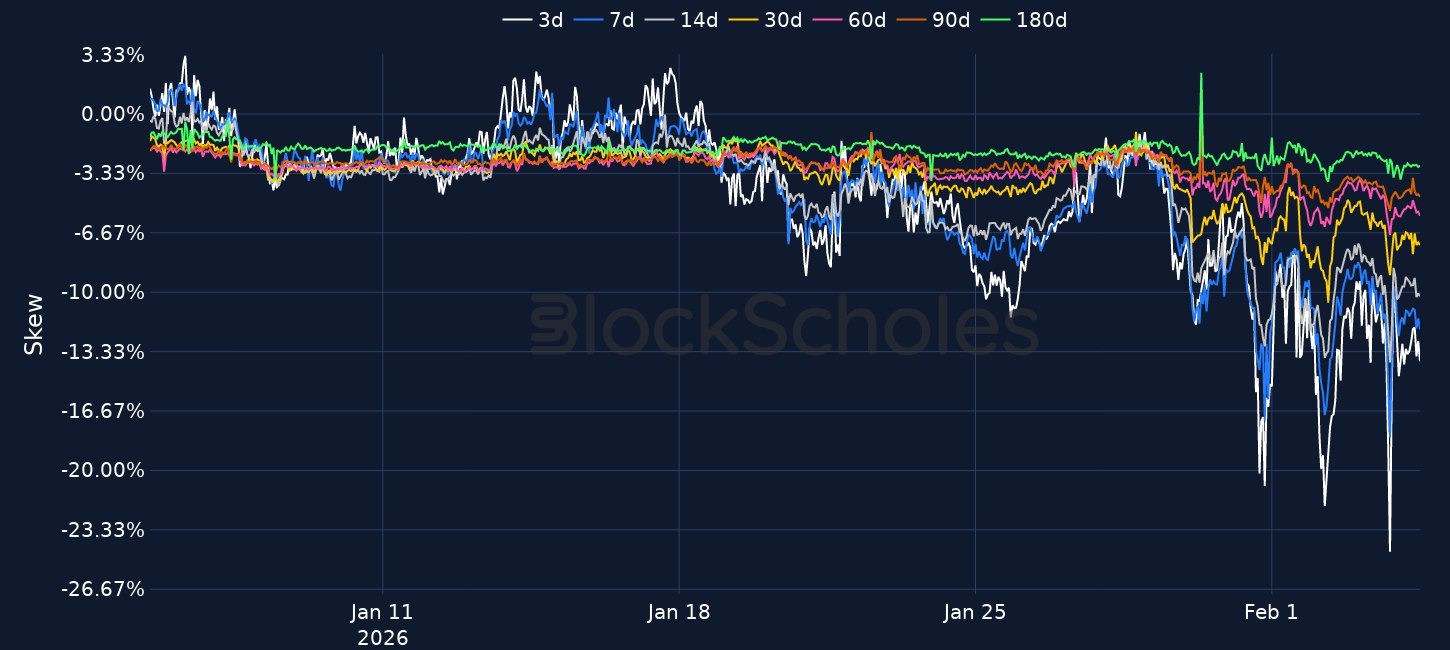
- Derivatives markets also provide little respite and continue to price for a further slump in prices. BTC and ETH funding rates briefly turned negative earlier this week (though they trade close to neutral now), while volatility smile skews for both assets are significantly tilted towards put contracts. The 7-day skew for BTC trades at -8%, while for ETH, put options have an 11 volatility point premium over calls.
- President Trump has signed a $1.2T spending bill, bringing the partial US government shutdown to an end after days of disruption across agencies, including defence, health, labour and transportation.
- Now the attention is centred on Homeland Security, which only has fundraising in place until Feb 13
- Risk-off sentiment was not just contained to crypto markets either yesterday. All three major benchmark indexes for US equities sold off yesterday, led by declines in software businesses, after Anthropic announced a new AI automation tool. The S&P 500 closed 0.84% and the Nasdaq-100 index ended the day down 1.55%.
- The new tool announced by Anthropic included new capabilities for automating the review of legal briefs and contracts and heightened concerns that software companies are lagging behind big tech firms.
- Metals traders bought the dip on precious metals after Friday’s violent selloff, with gold and silver partially recovering their losses of last week. Gold prices are up 2% so far today, after a 6% gain on Monday and now trades back above $5,000 an ounce. Silver extended gains to as much as $90 per ounce, before slipping to trade at $88.
- Two Federal Reserve officials provided contrasting outlooks on the US economy and thus the path for monetary policy yesterday. Governor Stephen Miran told Fox Business “I’m probably looking for a little bit more than a point of interest-rate cuts over the course of the year”, arguing that “When I look at underlying inflation, I don’t really see a lot of very strong price pressures in the economy”.
- According to Miran, the Fed is “keeping rates too high, mostly because of quirks of how we measure inflation, rather than actual price pressures themselves.”
- Richmond Fed President Tom Barkin on the other hand argued that inflation pressures are not yet entirely removed from the economy, but rather the Fed is in its final stretch against inflation.
- During an event yesterday he said “I think of these cuts as having taken out some insurance to support the labour market as we work to complete the last mile to bring inflation back to target”. He added that “while we’ve made a lot of progress on inflation, it still remains above our target. That’s been the case since 2021.”
- Barkin also reinforced comments from Powell during the January FOMC meeting regarding upward revisions for growth in 2026 — “The economy could get meaningful additional support from government policy. Significant stimulus is underway, from tax refunds, reduced withholding, and lower gas prices … Deregulatory efforts should support growth, too.”
- Bitwise is set to acquire Chorus One, an institutional crypto staking infrastructure provider that runs validator nodes across major proof-of-stake networks, letting funds, custodians, exchanges and wallets earn staking rewards.
- The price details of the deal have not yet been disclosed.
- Aave Labs is scrapping the Avara umbrella and shutting down the Family wallet as it narrows focus back to its core DeFi business.
- Side projects that sat under Avara, including Lens, are now being set aside and not being treated as part of its core business with future products and apps returning to the Aave Labs name.
- Tether has scaled back a potential capital raise after investors pushed back on the size and valuation the company was seeking.
- The FT states that Tether had explored raising up to $20B at a valuation of roughly $500B, but discussions have now been shifted to a smaller raise of approximately $5B.
- Canada’s investment industry regulator, CIRO, has rolled out a new Digital Asset Custody Framework aimed at reducing losses from hacks, fraud and weak governance.
- The rules set out what crypto trading platforms must do to safeguard client assets, and introduce a four-tier, risk-based system that limits the share of clients assets that a custodian can hold depending on its safeguards, oversight and resilience.
- Top-tier custodians (Tier 1 and Tier 2) meet the strongest standards and can hold up to 100% of client assets, lower tiers can hold up to 40%, while in-house custody by dealers is capped at 20%.
- Vitalik Buterin is moving away from Ethereum’s old “rollup-centric” roadmap, saying L2s have decentralised much more slowly than expected, while the Ethereum base layer has continued to improve and advance more
- In a post on X, he said the gap between those two trends means “the original vision of L2s and their role in Ethereum no longer makes sense, and we need a new path.”
- He argues many L2s “are not able or willing to satisfy the properties” a real “branded shard”, what he is calling 3rd party shards from the original plan, would need, stating how few have progressed through Stage 1.
- He also flagged that some teams may never fully decentralise because they want control for compliance reasons, saying he’s seen at least one L2 explicitly argue it might not go further “because their customers’ regulatory needs require them to have ultimate control.”
- He said L2s should be “a full spectrum” - from chains “backed by the full faith and credit of Ethereum” to “options at different levels of connection to Ethereum” that users are "free to care about or not care about depending on their needs.”
- He added that L2s should reach Stage 1 “at the minimum,” otherwise they start to look more like an “L1 with a bridge.
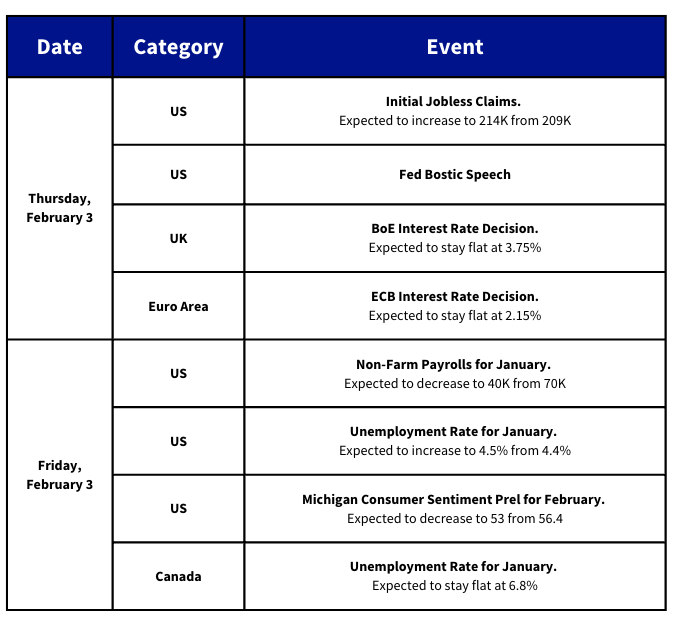
This Week’s Calendar:


Charts of the Day: