Bitcoin Falls 40% From October 2025 Levels After Weekend Selloff
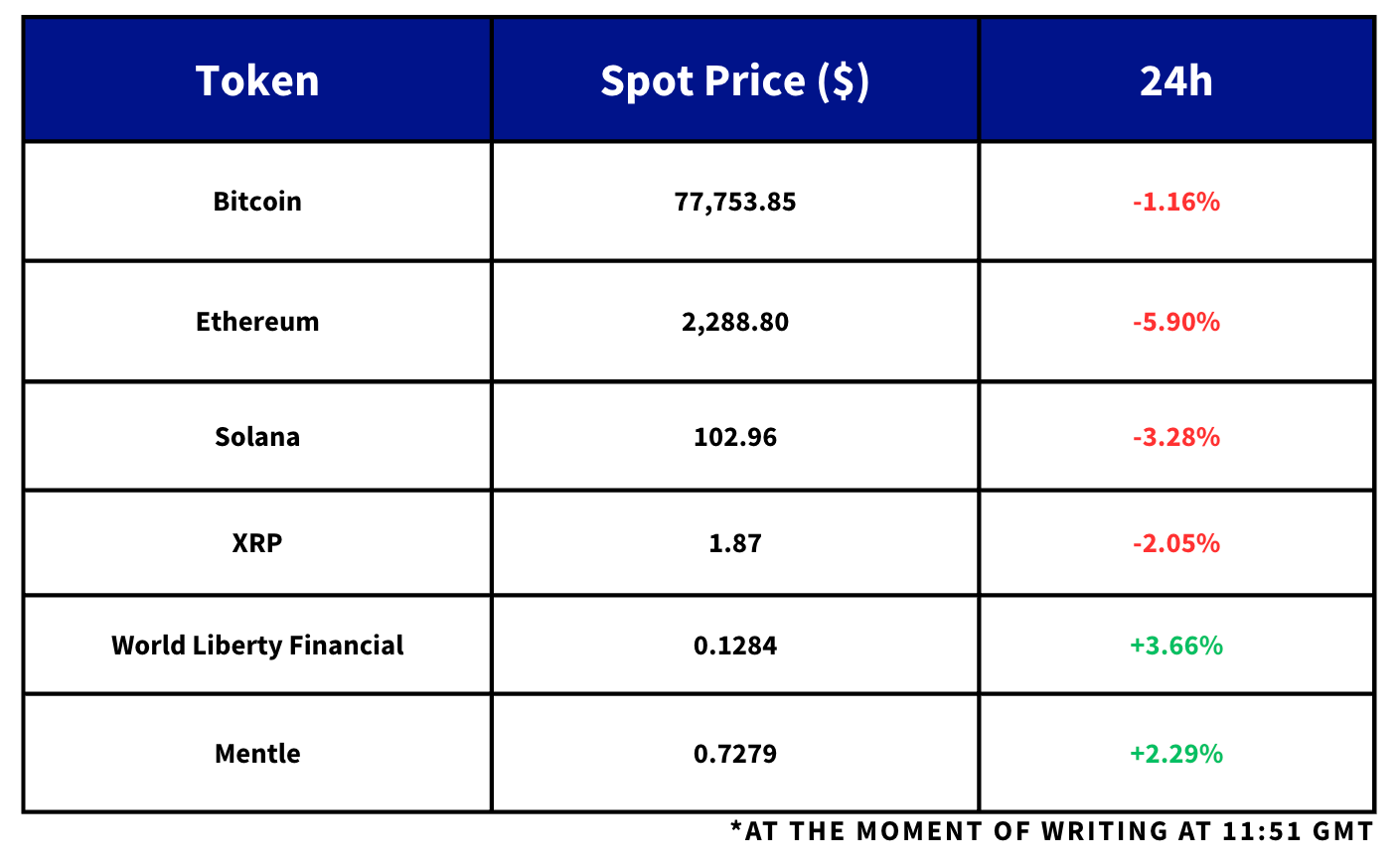
Crypto’s selloff deepened over the weekend, with BTC briefly touching $74,000, nearly 40% below its October 2025 all-time high, and ETH sliding 19% over the past week as roughly $300B was wiped from total market capitalisation. Derivatives markets turned decisively risk-off, with ETH funding rates flipping negative, put skews falling to post–Liberation Day extremes, and both BTC and ETH volatility term structures inverting as short-dated implied volatility surged. ETF flows also deteriorated, with $1.5B of spot Bitcoin ETF outflows and more than $300M of spot Ethereum ETF selling, while altcoin flows remained mixed, led by XRP outflows of 52.3M and smaller losses in SOL alongside modest DOGE inflows. Broader macro volatility added pressure as the US dollar rallied sharply on Federal Reserve leadership developments, precious metals suffered heavy losses, and geopolitical tensions in the Middle East continued to weigh on risk sentiment.

Find out our latest reports, listed below:
Market Snapshot: Overnight Moves

Daily Updates:
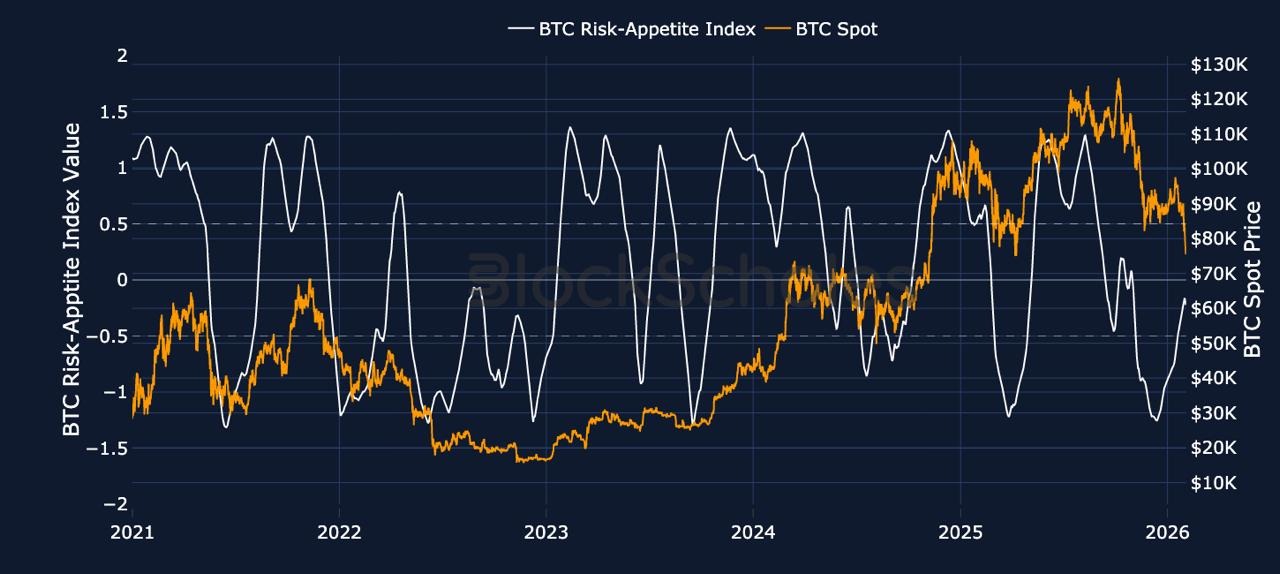
- The selloff in crypto continued to worsen over the weekend and in early trading today. BTC fell as low at $74,000, down nearly 40% from its October 2025 all-time high. The last time it traded this low was post-President Trump’s Liberation Day tariffs in April 2025.
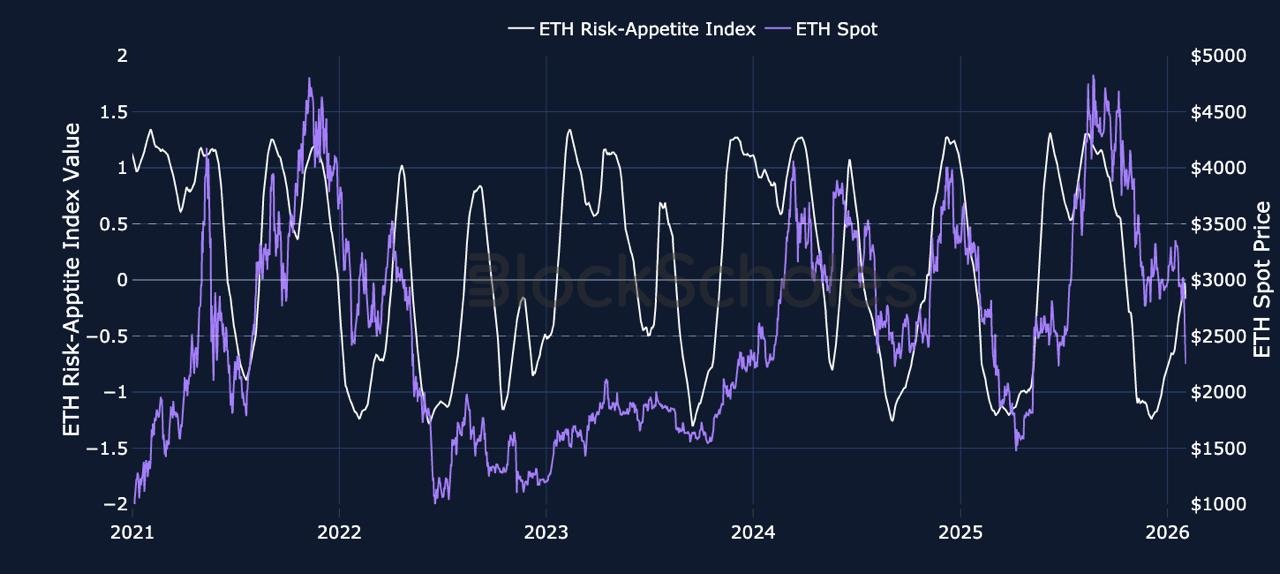
- ETH is down 19% over the past week and currently trades just under $2,300, while (according to CoinGecko) more than $300B has been wiped from the total cryptocurrency market cap.
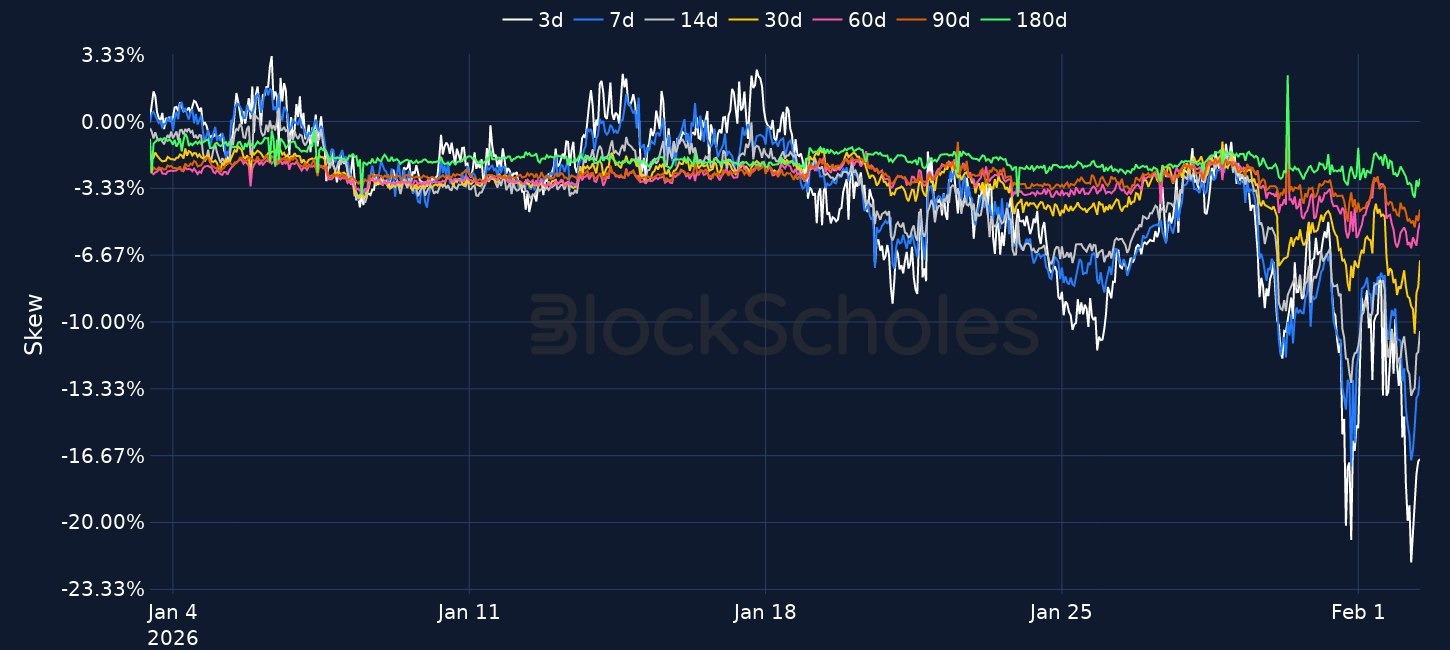
- The selloff has soured sentiment across derivatives markets: funding rates in ETH fell to -0.007% over the weekend, indicating short traders willing to pay a premium to maintain their positions, while the 25-delta put-call skew ratio for ETH also fell to its lowest (-17%) since the aftermath of the Liberation Day selloff.
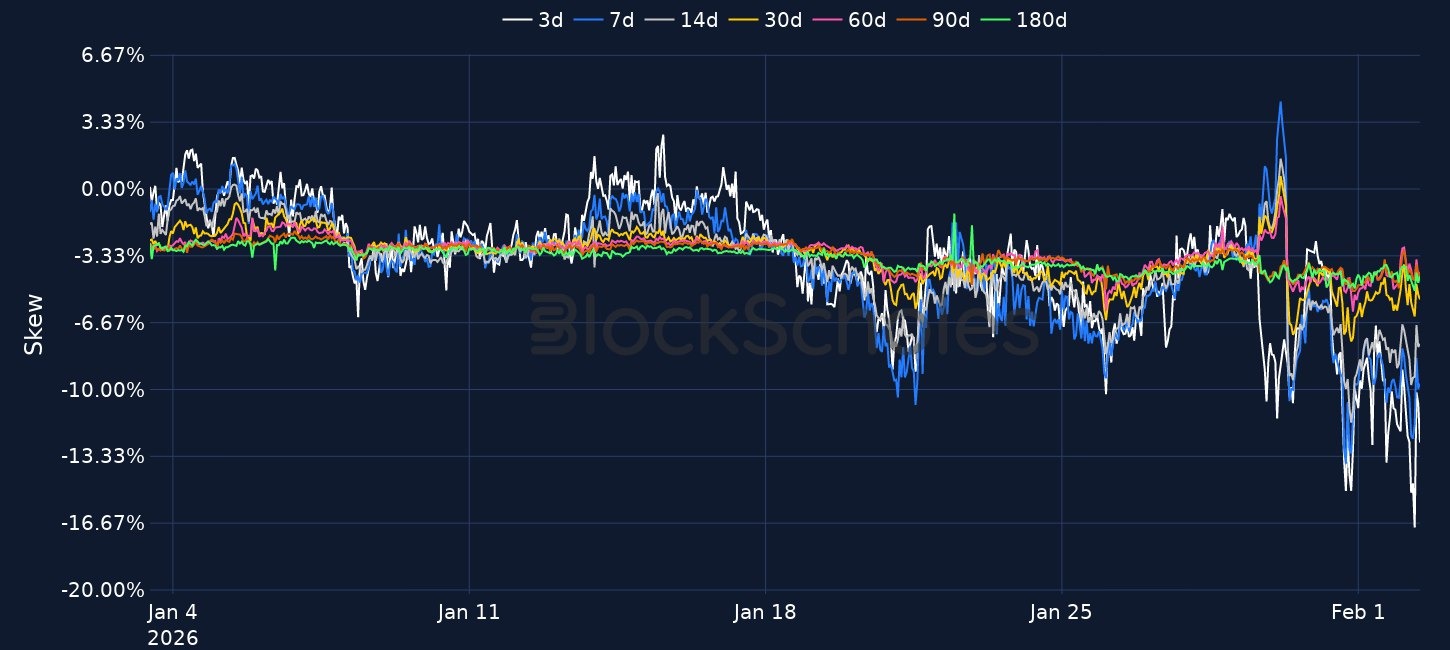
- For BTC, the put-call skew ratio for 7-day options trades at -13%, the most bearish positioning since late November 2025, when BTC fell to $80K.
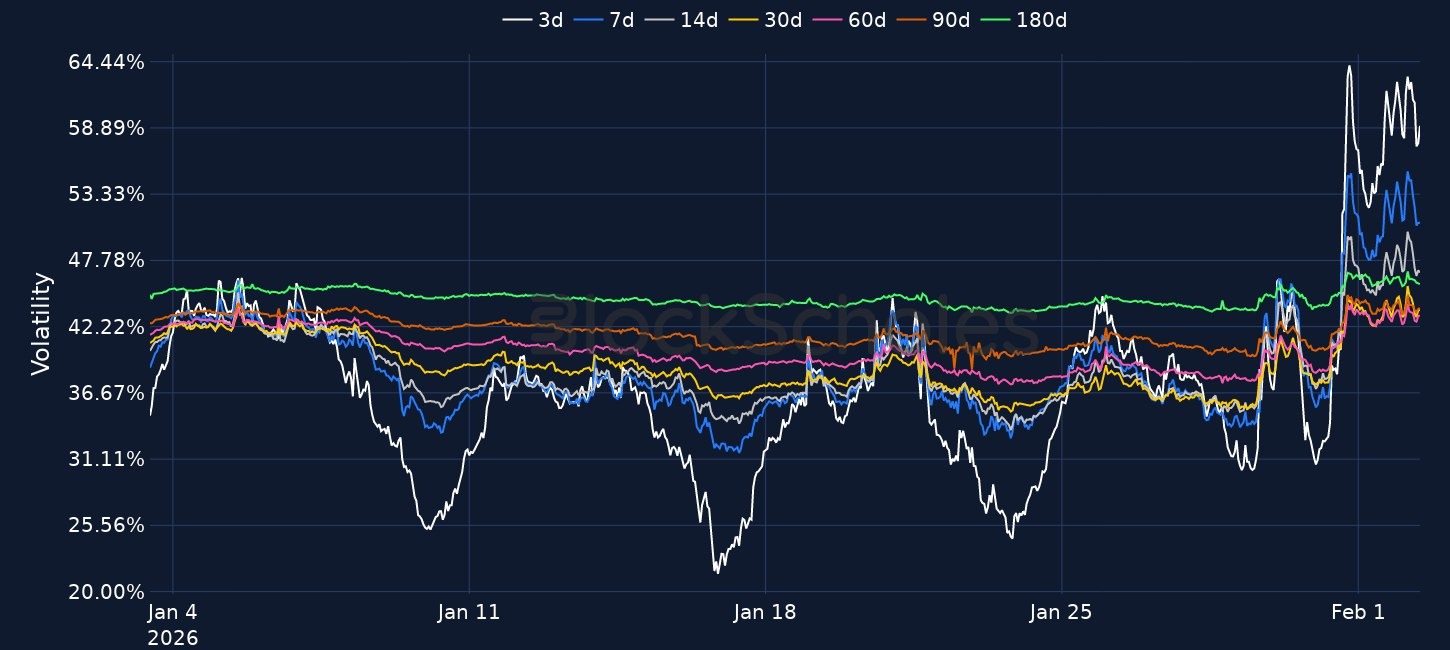
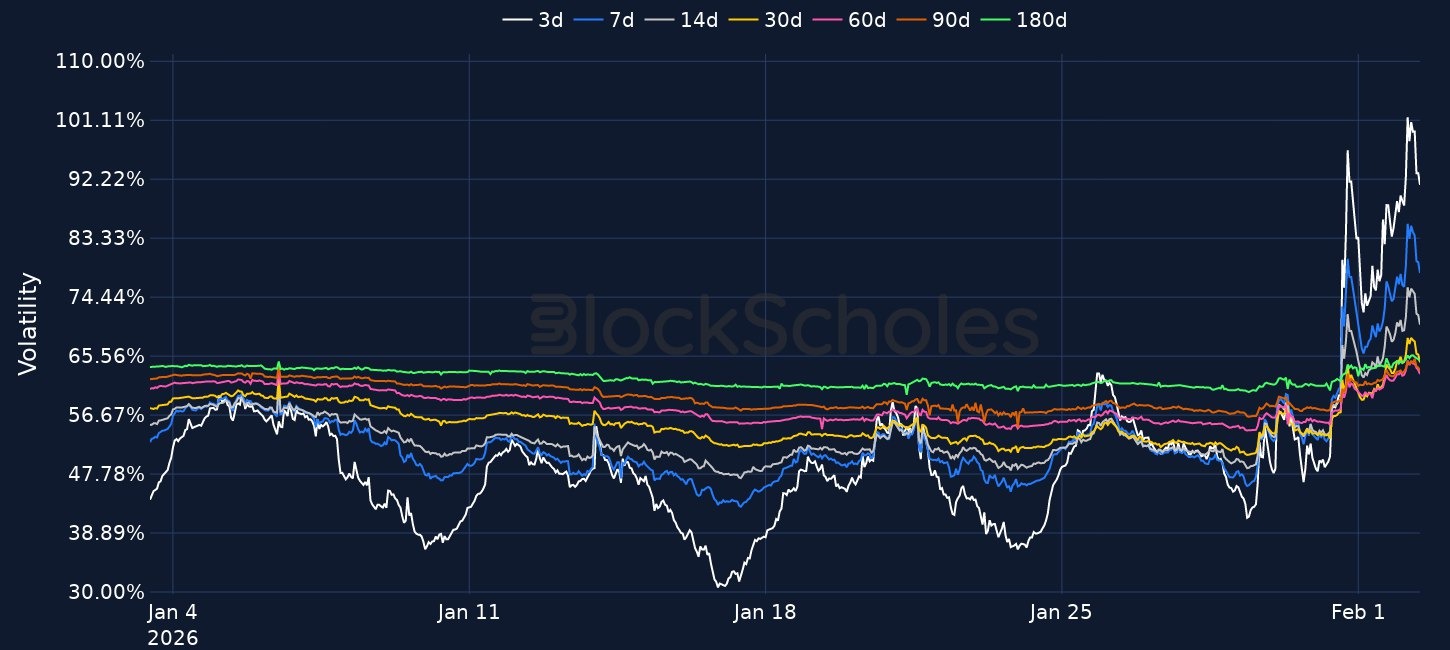
- The implied volatility term structures for both BTC and ETH are now inverted, with short-dated volatility jumping from 34% to 55% and 46% to 85% since the end of January for BTC and ETH respectively.
- It’s also the first time since September 2024 where BTC currently trades below the average cost basis for Spot Bitcoin ETFs. Average cost basis is defined as daily BTC inflows into Spot ETFs on a particular day divided by BTC’s price on that day to form a running average entry level.
- Over the past week, Spot Bitcoin ETFs saw outflows of $1.5B, while Spot Ethereum ETFs sold more than $300M worth of the token.
- Over the last week, XRP recorded net outflows of 52.3M, driven by its largest single-day outflow from the day of launch 92.92M on 29 January 2026, while SOL saw net outflows of 2.4M over the same period and DOGE recorded inflows of 246.03K on Monday, 26 January.
- Last Friday was also marked with volatility in other macro asset classes too. The US dollar had its largest single-day rally since May 2025 after President Trump officially nominated Kevin Warsh for the Chairmanship of the Federal Reserve.
- Precious metals on the other hand experienced one of their sharpest selloffs in decades. Gold is down an additional 4% today, trading at $4,700 an ounce — compared to an all-time high of $5,500 only on Jan 29. Silver prices tumbled on Friday for their biggest single-day loss since 1980, and currently trade at $82 per ounce, relative to an all-time high upwards of $120/ oz.
- Volatility in the Middle East is also continuing to weigh on the macro environment. President Trump has intensified his pressure on Iran, imposing new sanctions on Iran while urging its leader to “make a deal”. On Friday at the White House he said, “If we do make a deal, that’s good. If we don’t make a deal, we’ll see what happens”.
- Iran’s Supreme Leader on the other hand warned that a “regional war” could break out should the US strike Iran. In a speech yesterday he said, “We don’t want to attack any country. But in response to anyone who harbours ambitions, wants to attack, and seeks to cause harm, the Iranian people will strike back forcefully.”
- On the other hand, Iran’s Foreign Minister Abbas Araghchi said over the weekend that Iran was ready to “embrace a fair and equitable nuclear deal”, “ensuring 'No Nuclear Weapons' and guaranteeing the lifting of sanctions.”
- Jupiter, Solana’s largest decentralised exchange (DEX) aggregator, is bringing Polymarket to the network via a new in-app integration that embeds prediction markets directly into its trading interface.
- In a Sunday post on X, Jupiter said it has launched a built-in “Prediction” feature, allowing users to trade Polymarket contracts without leaving the Jupiter app.
- “Integrating Polymarket is primed for making Jupiter the most innovative predictions platform on Solana,” the exchange said, positioning Jupiter as a hub for prediction markets on Solana by combining its existing trading interface with Polymarket’s event-based markets, which are now accessible directly within the Jupiter app.
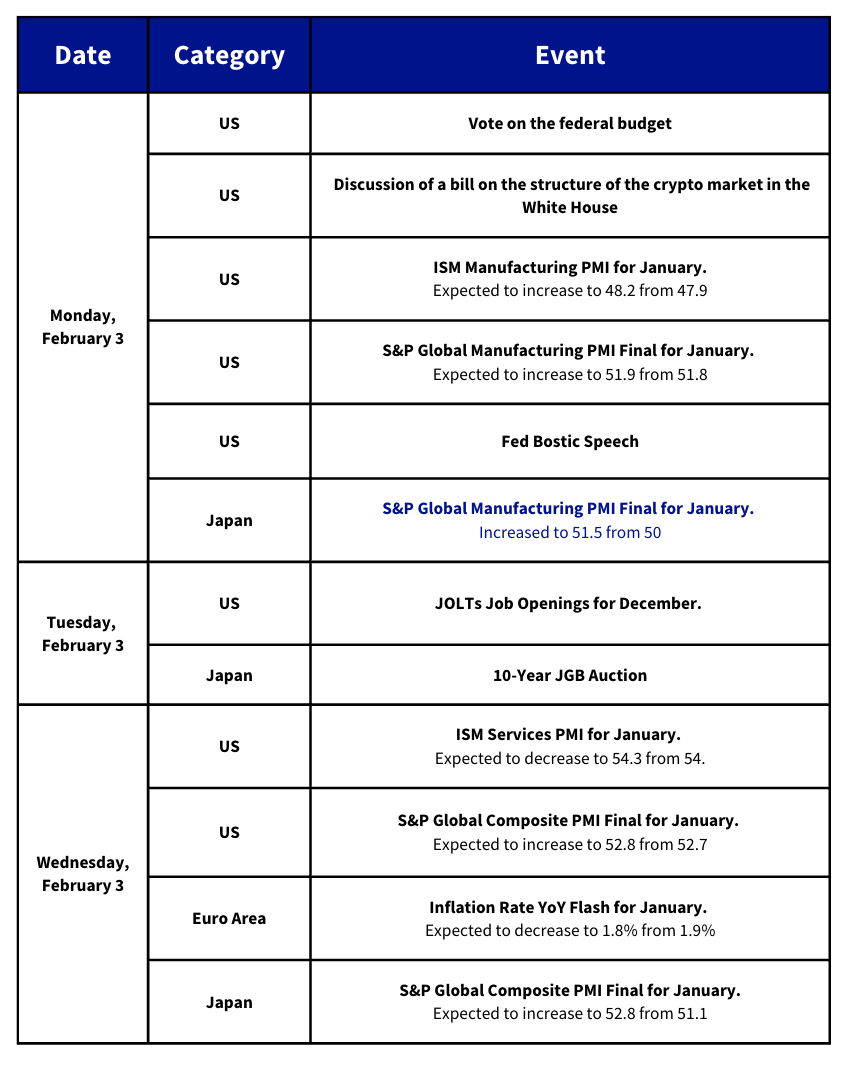
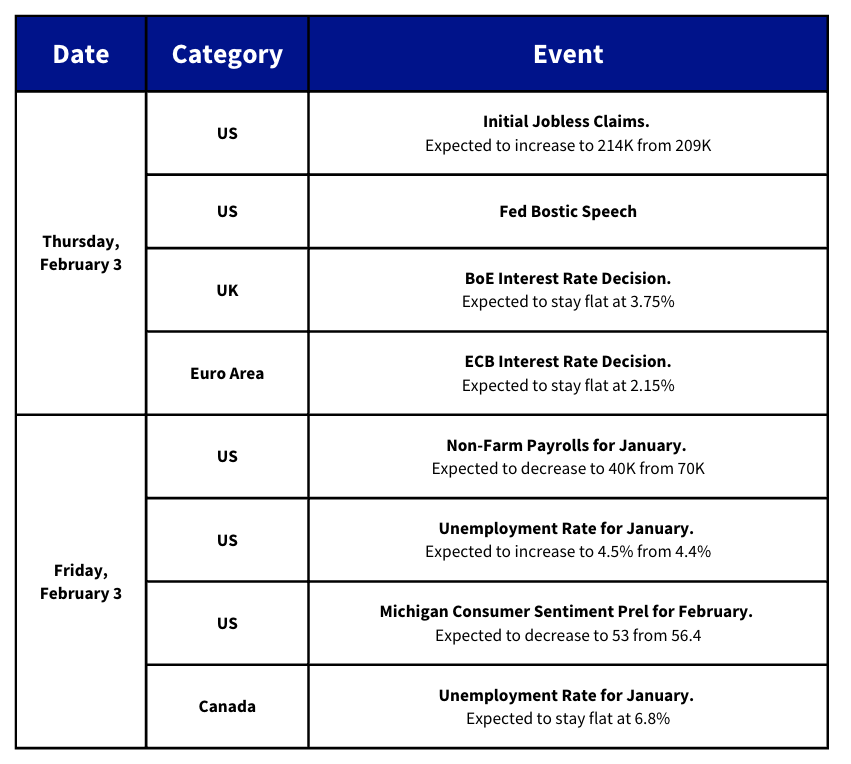
This Week’s Calendar:


Charts of the Day: